Auto-detect first; manual choice is saved
Auto-detect first; manual choice is saved
Kig Character Body Language: Let the Body Speak Before the Pose
Translate soft, energetic, cool, neutral, mature, and special-color character moods into shell scale, material texture, outfit volume, endpoints, movement rhythm, and a calmer photography plan.
Contents
Now · Translate the mood words into configuration
Quick take
Turn character mood into visible choices. A soft character may need relaxed shoulders, clean cuffs, and a light skirt rhythm; an energetic one needs room for arms, waist, shoes, and props to move; a cool character may favor quieter posture and cleaner layer boundaries. The goal is to make shell, Kig skin, outfit, hands, feet, and camera perform the same role.
Translate the mood words into configuration
Soft, energetic, cool, youthful, mature, and special-color are good sparks, but they are not finished instructions. Turn them into checkable fields: shell diameter, shoulder-neck transition, line strategy, Kig-skin thickness, outfit volume, hand-foot motion, color, lighting, and camera distance.
A steadier brief defines the character direction first, then names which lines should stay, which edges should soften, which clothing layer helps the shell land, and which endpoints or maintenance paths must remain usable. Then the maker, photographer, and support helper read the same styling map instead of guessing from a mood word.

- Character direction: soft, energetic, cool, youthful, neutral, mature, or special-color.
- Line strategy: soften, keep a little, clearly keep, or still undecided.
- Kig-skin strategy: thin, regular, thicker coverage, flexibility-first, or coverage-first.
- Outfit strategy: fitted, full skirt, jacket, long sleeves, cape, techwear, or larger props.
- Camera strategy: close-up, half-body, full-body, side/back, and event movement are read separately.
Split five baselines: head, skin, endpoints, outfit, and motion
A single attractive reference can drag the whole plan sideways. Check five basics first: whether the head reads as a stable hard animegao shell, whether the Kig skin follows a matte hadatai or smooth Lycra direction, whether hands and feet are covered cleanly, whether outfit volume supports head-body balance, and whether motion can stay coherent.
This prevents one good point from becoming a fake all-clear. Good suit texture does not guarantee a calm head expression. A beautiful shell does not prove the fabric is right. Hand-foot endpoints, face-window edge, wrist and ankle transitions, and costume waistlines still need their own checks.
- Head shell: hard animegao / kigurumi shell, stable expression, wig covering shell edge and ear zone.
- Neck: the shell does not carry a long built-in neck; a short neck cover, high collar, or costume layer receives it.
- Kig skin: matte hadatai, thin stretch, soft wrinkles, not ordinary clothing and not full-body oily shine.
- Hands and feet: five fingers and five toes are the baseline; tips, no-nail feel, and wrist/ankle continuity still matter.
- Motion: raised arms, sitting, walking, turning, and prop handling should not break the look.
Soft routes: light, gentle, connected, but still structured
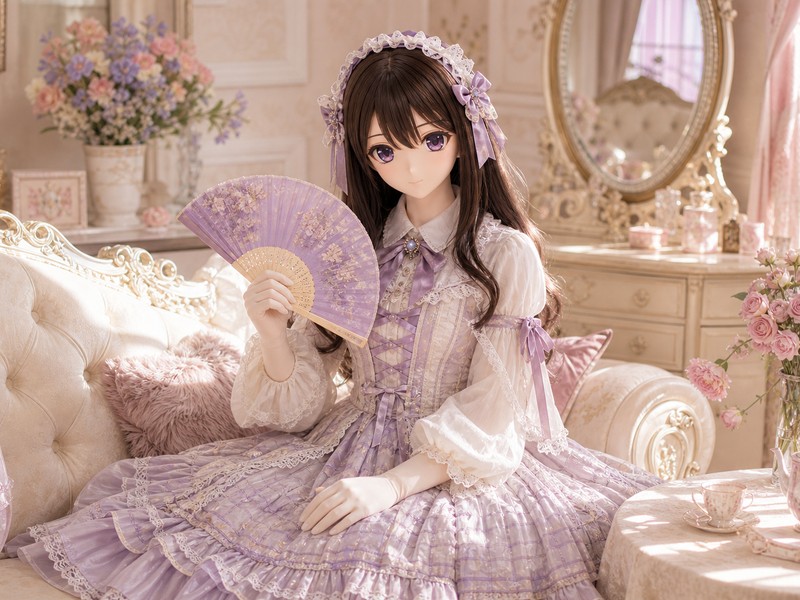
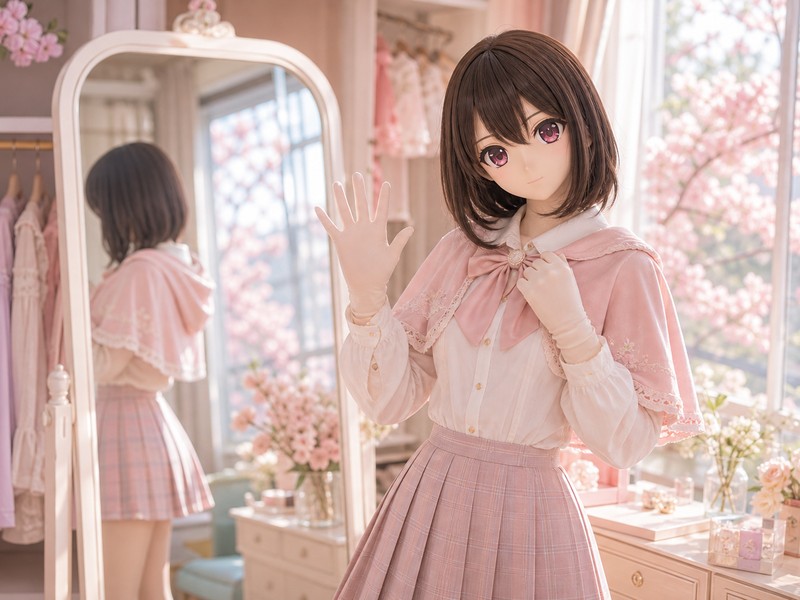
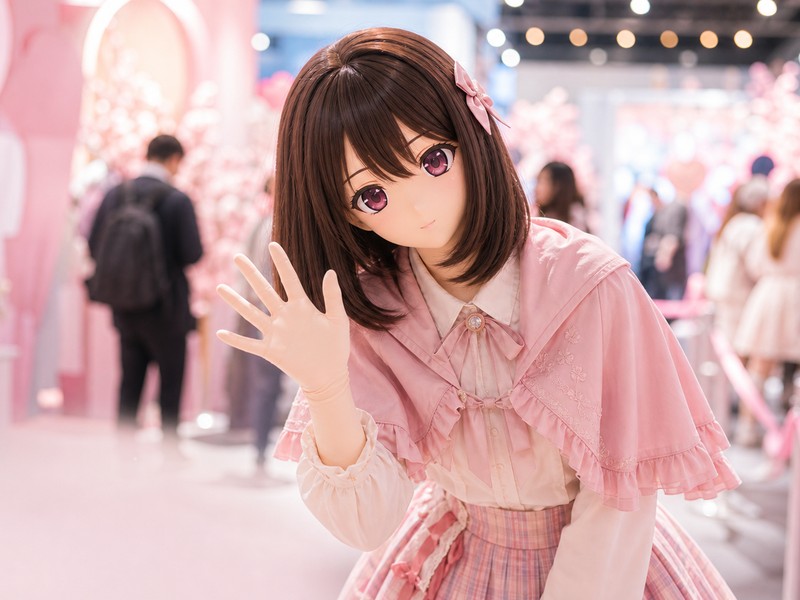
Soft heroine, healing, and doll-like routes usually need a calmer shoulder-neck line, lighter skirt volume, cleaner cuffs, and smoother wrist transitions. The point is not to make body structure disappear; it is to keep shell, wig, neck, collar, hands, and skirt in one gentle rhythm.
This style especially asks for wrist, cuff, and neck checks. If hands are visible, the five-finger Kig fabric hands should feel small and natural. If the outfit is light, thickness, underlayer marks, and light transmission should be checked before the shoot.

- Shoulder and neck: collar, hair ends, cape, and neck skin should connect smoothly.
- Wrists: attached hands should stay light and close to the fabric line, without hard cuff edges.
- Skirt: volume can soften the lower body without taking away movement or access paths.
- Tone: shell, short neck cover, wrists, and exposed legs should be checked under the same light.
Energetic idol routes need motion range more than decoration
Energetic, idol, and sporty routes depend on movement. Raised arms, heart gestures, turning, running energy, props, and camera response make hands, cuffs, waistline, skirt length, and shoes visible together.
This style should not chase coverage alone. Skin that is too thick, cuffs that are too tight, skirts that are too large, or shoes that are too heavy can shrink the motion. Waistline, sleeve shape, wrist access, shoe choice, and support rhythm need to be planned early.

- Hands: if props or phone use matter, wrist or palm-side access should be known early.
- Waistline: short jackets, high-waist skirts, and belts can give movement a center.
- Shoes: round-toe shoes, sneakers, and boots change foot space and leg ending.
- Event use: photo posing and offline walking do not need to carry the same volume.
Cool, BJD-like, and neutral routes rely on order
Cool, BJD-like, and neutral routes depend on visual order: low saturation, smoother fabric, clean shoulder-neck connection, restrained posture, and stable camera distance. This does not mean making the body stiff; it means reducing extra noise so shell, clothing, and Kig-skin boundaries read clearly.
Jackets, long hair, capes, high collars, long skirts, and neutral color panels can support this path. Hands can rest inside sleeves or behind props, and feet can settle into shoes or skirt hems, reducing small endpoint mistakes in the image.

- Color: low saturation, gray blue, ivory, charcoal, and warm-peach skin need calibration together.
- Posture: front, side, lowered-head, and turn-back poses should keep natural skeleton length.
- Outer layers: jackets and capes soften shoulders, but the waistline should not vanish.
- Camera: check close-up and full body; do not judge the whole path from one half-body image.
Mature and masculine routes start with body texture, not a label
Masculine and mature routes are not one configuration. Slender boy, school-uniform boy, sporty, mature, battle, idol, and techwear characters need different thickness, line retention, clothing structure, shoes, and motion range.
A clearer brief starts with body feel: should lines be softened, partly kept, or clearly kept? Is the tone regular, pale, yellow-leaning, or special? Is the outfit a school uniform, jacket, sportswear, long coat, or techwear? Thickness, coverage, markings, and maintenance paths come after that.
- Slender boy: focus on shoulders, wrists, uniform volume, and shell size.
- Sporty style: focus on movement range, elbows/knees, shoes, and hand flexibility.
- Mature or battle style: focus on line retention, outer structure, coverage, and heat.
- Techwear: focus on layers, props, access paths, and support routing.
Special-color bodies: color is only the first layer
Blue skin, pale gray, dark glossy feel, tattoos, markings, and non-natural skin colors should not be reduced to whether the material can be made in that color. Check shell-in-frame samples, daylight and indoor-light difference, stretch lightening, reflection, friction fading, cleaning method, and repair boundary.
Exposure changes everything. The more skin a character shows, the easier it is to see color gaps at the shell, neck, wrists, legs, and shoe opening. Markings near joints or high-friction areas need early questions about distortion and durability.

- Custom color: ask for swatches, shell-in-frame samples, and light tests.
- Markings: ask about stretch distortion, friction areas, cleaning, and repair.
- Finish: matte, skin-like, glossy, gel-like, and dark glossy looks should stay separate.
- Thickness: special colors often change coverage, transparency, heat, and hand feel together.
From standing steadily to finished photos: do not jump straight into an all-day shoot
Buying the head shell, Kig skin, wig, and outfit is only the beginning. Character body language1 still depends on standing stability, motion, camera distance, light, support logistics, and collaboration flow. A steadier order is: pass the equipment baseline, practice lower-commitment movement, use selfies to test proportion and angle, make a small finished-photo sample, and leave video or full collaboration for later.
The beginner trap is turning ‘I finally put it on’ into ‘I should book a whole day of photos now.’ That sounds brave, but in practice it becomes an equipment stress test. The first run should show whether the wearer can see the floor, turn safely, hydrate, rest, and end gracefully before chasing complex poses.
- Stage 0: pass the equipment baseline—shell fit, vision, pressure points, hand-foot endpoints, neck continuity, wig bangs, hydration, rest point, and exit route.
- Stage 1: practice lower-commitment movement—front standing, slight side poses, and small hand gestures before sitting, crouching, turning, or prop actions.
- Stage 2: use selfies as tests—full-body, half-body, and head-shoulder crops; change one variable at a time.
- Stage 3: finished photographs start with a small sample—character goal, shot list, venue limits, time plan, and image-use permission first.
- Stage 4: video starts with 5- to 10-second clips and a clear stop signal.
Photographer collaboration: scope, delivery, and stop conditions come first
Photographer collaboration does not work automatically just because one person can shoot and the other can wear the setup. In Kig shooting, shell vision, hydration, rest, maintenance access, support, and image-use permission all affect the session rhythm. If these are not written before the shoot, delivery and usage arguments tend to arrive after the shoot.
Write the collaboration as a brief: theme, character, outfit, location, time, fee or TFP arrangement, raw files, retouching, delivery count, delivery window, credit, sharing permission, edit permission, commercial use, event submission, on-site helper, rest point, and stop conditions.
- Theme and character: state what the set should express; list full-body, half-body, prop, side/back, detail, and avoid-angle shots.
- Location and duration: confirm shooting, changing, resting, hydrating, and support-helper access; first sessions should stay short.
- Delivery and credit: define raw files, retouched images, image count, delivery window, credit style, and edit permission.
- Image use: separate personal archive, small-group sharing, platform posting, photographer portfolio, and commercial use.
- Stop conditions: dizziness, poor floor vision, hydration trouble, overheating, abnormal openings, or obvious discomfort can pause or end the session.
Write one brief for maker, photographer, support, and wearer
The wearer also needs a privacy boundary: finished photographs, fitting tests, maintenance details, and failed movements should not be treated as the same material.
If the direction is still undecided, compare three plans first: soft, energetic, and cool or neutral. Putting the same character into three body-language styles is more useful than asking in the abstract whether the character suits the wearer.
- For the maker: character art, shell context, measurements, material path, thickness, line strategy, and special color.
- For the photographer: full body, half body, side/back, movement range, distance, light, and endpoints to avoid enlarging.
- For support: wear time, hydration, rest points, access paths, removable layers, and prop handoff.
- For the wearer: define the character identifiers that must stay, the adjustable volume, missing details, and privacy boundaries.
Reading notes
- This guide discusses character body language and configuration communication, not body judgment.
- Mature routes, thicker Kig skin, and special colors are requirement fields, not labels.
- Do not collapse shell aesthetics, Kig-skin material, endpoints, outfit volume, and motion stability into one vague score.
Continue reading
Kigurumi Structure Field Guide: Skin Is Skin, Head Is Head
A polished Kig look does not come from blurring every part into one soft filter. Read the structure clearly: the animegao head is a manufactured hard shell, the lower rim meets an independent hadatai neck cover or collar, hands and feet continue the fabric-skin logic, and the outfit sits over that base.
Continue reading →Animegao Head-Shell Design Guide: The Face Is Built Before It Is Painted
An animegao face is not finished by adding big eyes and blush. Read the hard shell first: forehead, low-relief nose, cheeks, chin, mouth, lower rim, and profile should feel like one manufactured surface. Eye plates, eyeliner, blush, highlights, wig edge, neck transition, and camera angle then support that structure.
Continue reading →Kig Proportion in the Frame: Shell, Wig, Outfit, and Camera
Kig head-body proportion is not a height chart or a single head-size verdict. The hard shell, wig volume, lower rim, neck cover, shoulders, waistline, outfit volume, shoes, endpoints, movement, and camera distance build the result together. Use proportion as a styling adjustment, not a body score.
Continue reading →