Auto-detect first; manual choice is saved
Auto-detect first; manual choice is saved
Kig Proportion in the Frame: Shell, Wig, Outfit, and Camera
Stop judging the look from one number. Place the hard head shell, wig volume, shoulder-neck line, outfit volume, shoes, movement, and camera distance in the same frame.
Contents
Now · Move proportion from number judgment to the styling table
Quick take
The useful question is not simply whether the head looks large. Animegao is designed to let the shell, eyes, and wig hold attention; what matters is whether the shoulders receive that weight, whether the wig softens the lower rim, whether clothing balances the lower body, and whether the camera is too close. Close-up, half-body, full-body, and motion each tell a different truth. When those views agree, the character begins to stand naturally.
Move proportion from number judgment to the styling table
Kig/animegao proportion cannot be judged by one measurement. The hard shell, wig, neck base, shoulder line, outerwear, skirt, shoes, and camera distance all speak at the same time. Staring only at whether the head is large can hide the actual fix: collar, hair end, waistline, lower-body volume, or lens distance.
A better method is to place the adjustable variables on one table: head-shell diameter, wig volume, shoulder-neck transition, waistline, lower-body weight, shoe shape, motion range, and shooting distance. Each variable can move a little. Together they turn ‘equipment stacked together’ into ‘the character has landed.’

- Start with the character direction: soft, sharp, stage-like, everyday, youthful, cool, or doll-like.
- Start with the frame: avatar, close-up, half-body, full-body, or video each magnifies a different issue.
- Start with the outer layer: collar, sleeves, skirt, shoes, and props redistribute visual weight.
- Start with movement: standing still can look fine while sitting, raising arms, or turning exposes the real gap.
Head-shell diameter: first visual weight, not bigger-is-better
An animegao shell naturally pulls more attention than a human face, and that is part of the charm. But if the shell is too dominant, the lower rim is too hard, or the neck and shoulders cannot receive the shape, the head begins to float above the body instead of becoming the character’s face.
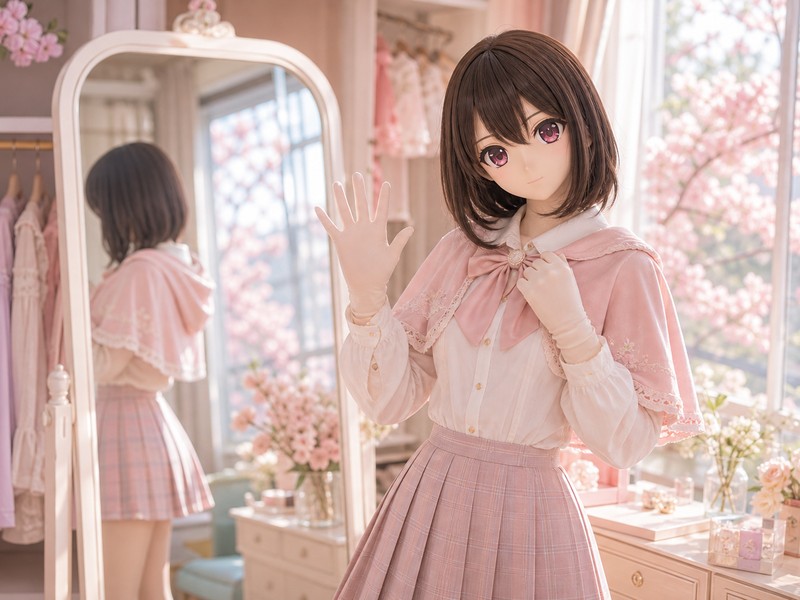
Do not judge shell size from the front alone. Front view can be poster-sweet, while a three-quarter view reveals the cheek curve, lower rim, back-of-head depth, or shoulder-neck gap. Half-body and full-body images then show whether the outfit and shoes give enough counterweight.

- Front view: eye position, chin, cheek curve, and shell diameter should feel stable.
- 3/4 view: nose bridge, cheek plane, lower rim, and back-of-head curve become visible.
- Half body: shell, shoulder width, collar, sleeves, and hair ends need to connect.
- Full body: skirt, shoes, outerwear, and stance show whether the head has enough support.
Wig volume: the soft light of proportion, and sometimes the dandelion problem
A wig can help the shell land. Bangs soften the forehead, side locks frame the face, hair ends cover part of the lower rim, and longer hair can calm the shoulder-neck transition. Done well, it works like soft light. Overdone, it becomes a dandelion cloud and enlarges the entire head silhouette.
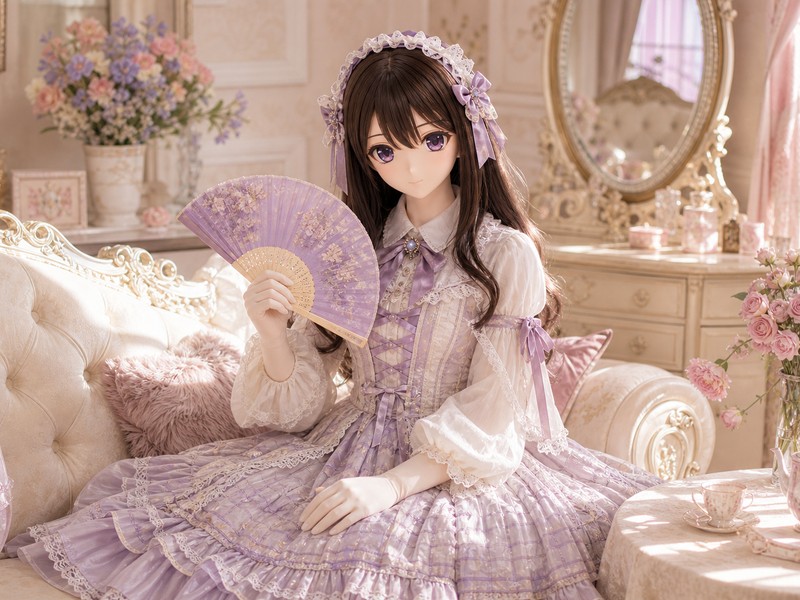
Check more than fullness. Hair direction, side coverage, back volume, end length, ear-zone cover, and the character’s design all matter. Short hair needs a cleaner shell curve and lower rim; long hair needs ends that cover naturally without crushing the collar or hiding the shoulders.
- Bangs: shape the forehead and eyeplate edge without blocking vision.
- Side locks: soften the face side and help hide local shell edges.
- Hair ends: connect to shoulders, collar, cape, or jacket without burying the neck.
- Back volume: too flat exposes shell shape; too inflated makes the whole head read larger.
Shoulder-neck transition: the detail that lets a hard shell land
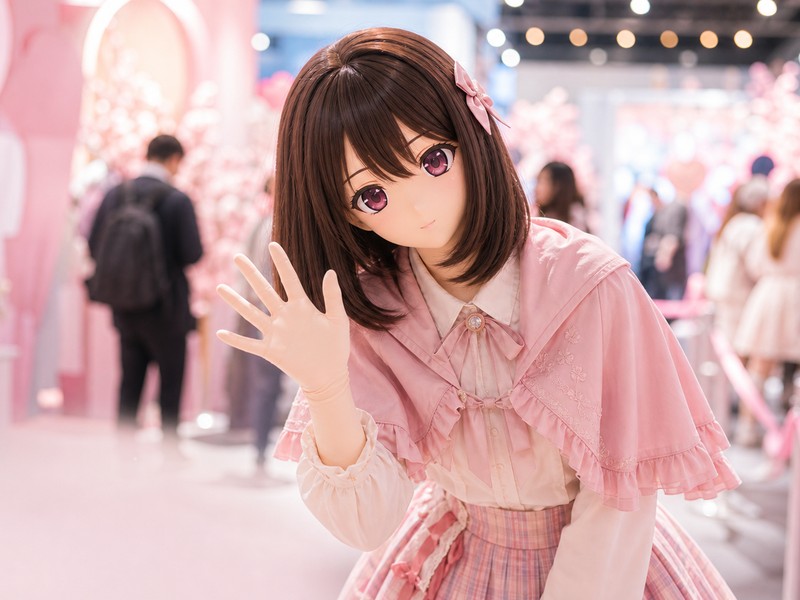
A beautiful shell still breaks if the lower rim and neck base do not connect. The transition is made from the hard shell edge, short Kig neck cover, collar, hair ends, cape, jacket, and shoulder line. The goal is not to hide everything; the goal is to make every layer explain the next one.
High collars, capes, short jackets, hair ends, and accessories can all help. The trap is piling them on without a plan. Too many layers bury the waistline, press the shoulders, and block access paths. The shoulder-neck line should feel like couture tailoring, not a panic blanket.

- Lower rim: hair ends, collar, cape, or neck cover should receive it naturally.
- Collar: high neck, square neck, cape, scarf, and jacket can all shift the read.
- Shoulder line: it should not shrink under the shell or be inflated randomly by outerwear.
- Access paths: back zipper, face-window rest position, wrist access, and large U opening still need space.
Camera distance rewrites the same outfit
The same setup becomes several different stories through the camera. A close-up emphasizes the face, eyes, wig edge, and hands. A half-body image starts checking shoulders, sleeves, chest layers, and hand position. A full-body image finally judges skirt width, shoes, leg exposure, stance, and whether the head-shell weight is balanced.
That is why an avatar crop cannot judge a full-body look. Prepare close-up, half-body, full-body, side, and motion references. The closer the camera, the cleaner the rim, material, and hand details need to be. The farther the camera, the more the silhouette and shoes matter.

- Close-up: shell curve, eyeplate, cheek, wig, and face finish.
- Half body: shoulders, collar, sleeves, arm length, and hand placement.
- Full body: head-body ratio, skirt volume, legs, shoes, and stance.
- Video: sitting, turning, walking, and raised arms reveal whether the setup stays stable.
Outfit volume supports proportion, but movement must survive
Clothing can tune proportion beautifully. A full skirt can support a strong shell, a short jacket can organize the shoulder line, boots can finish the ankle, and wide sleeves can calm wrist endings. But each layer also adds heat, weight, blocked access, and support work.
Test one variable at a time: collar or cape for shoulder-neck flow, skirt or jacket volume for lower-body balance, wig or headpiece volume for head outline, shoes for the final endpoint. When the fix is visible as a single change, the look becomes easier to repeat.
- Collar or cape: soften the neck and shoulder transition.
- Jacket or short outer layer: calm shoulders while keeping the waistline readable.
- Skirt or petticoat: balance the shell while adding movement radius.
- Shoes or socks: finish the leg line without letting feet dominate.
- Wig or headpiece: expand the head outline without crushing the neck.
Motion tells the truth faster than a perfect still
A standing image can look clean while movement exposes the weak point. Sitting, turning, walking, raising arms, holding props, drinking, and letting support guide from the side all test whether the shell rim, wig, neck cover, wrist endings, shoes, and outer layers stay believable.
Some fabric wrinkles around joints are normal. Watch for a broken layer: the shell floating away from the neck, hair ends collapsing into the collar, sleeves revealing edges, shoes fighting the foot shape, or outerwear blocking a needed access path. Movement is not an extra test; it is the stress test of the styling.
- Raised arms: sleeve edge, wrist, shoulder line, and hand scale.
- Sitting: skirt, shell-neck pressure, waistline, shoes, and large U access.
- Turning: back of head, wig coverage, back line, outer hem, and zipper path.
- Walking: foot endpoints, shoe opening, skirt movement, and whether the shell feels too heavy.
Turn ‘make it look balanced’ into a real brief
‘I want the proportion to look right’ is too vague for a maker, photographer, or support helper. Make the request checkable: shell front and three-quarter views, wig length, target outfit, exposed areas, shoes, shooting distance, common poses, and the problems to avoid. Then everyone knows whether the issue is shoulder line, waistline, leg read, wrist ending, or shoe opening.
Before a shoot, prepare more than one pretty full-body image: close-up, half-body, full-body, side and back views, sitting, raised arms, turning, and prop handling. Proportion can fake being solved in a still frame; the character has to stay coherent across angles.
- For the maker: shell size, neck cover, shoulder line, outfit volume, hand-foot endpoints, and access openings.
- For the photographer: close-up, half-body, full-body goals, camera height, shooting distance, and pose limits.
- For support: shell bag, wig protection, hydration point, rest point, prop handoff, and exit route.
- Never let one miracle image become the judge; compare several angle groups.
Reading notes
- This guide discusses character proportion, styling, and camera distance; it does not grade bodies.
- Proportion should be judged with the shell, wig, clothing, shoes, movement, and shooting distance together, not from one number.
- Try-on mistakes, maintenance details, and awkward movement frames are usually best kept private. Anything shared should be clear, anonymous, free of interfaces and watermarks, and safe for everyone pictured.
Continue reading
Kigurumi Structure Field Guide: Skin Is Skin, Head Is Head
A polished Kig look does not come from blurring every part into one soft filter. Read the structure clearly: the animegao head is a manufactured hard shell, the lower rim meets an independent hadatai neck cover or collar, hands and feet continue the fabric-skin logic, and the outfit sits over that base.
Continue reading →Animegao Head-Shell Design Guide: The Face Is Built Before It Is Painted
An animegao face is not finished by adding big eyes and blush. Read the hard shell first: forehead, low-relief nose, cheeks, chin, mouth, lower rim, and profile should feel like one manufactured surface. Eye plates, eyeliner, blush, highlights, wig edge, neck transition, and camera angle then support that structure.
Continue reading →Kig Character Body Language: Let the Body Speak Before the Pose
The starting question is not whether someone is allowed to portray a character, but how the character should stand, turn, lift a hand, sit in the outfit, and hold together at the intended camera distance. Kig body language is a styling system, not a body score.
Continue reading →