Auto-detect first; manual choice is saved
Auto-detect first; manual choice is saved
Kig Costume Volume Lookbook: Let the Silhouette Hold the Character
A full skirt or dramatic coat can create the first spark; head-shell balance, waistline, shoes, movement, sitting room, and the way home decide whether the outfit is ready.
Contents
Now · Start with the silhouette, not the biggest garment
Quick take
The outfit is not a final pretty filter thrown over the Kig skin. Skirts, coats, sleeves, shoes, and props are silhouette tools: they help the head shell land, soften the shoulders, finish wrists and ankles, and give the camera a cleaner line. Heat, weight, seating, blocked openings, transport, and support belong to the same styling decision.
Start with the silhouette, not the biggest garment
Do not begin Kig costume planning by asking where more fabric can hide the body. Ask what silhouette this character wants to become: soft doll, sharp uniform, cool long coat, sweet full skirt, or a cleaner everyday look. Head-shell size, wig volume, shoulder line, waistline, leg exposure, and shoe shape all decide whether the character lands—or whether the clothing starts performing by itself.
A steadier lookbook method is to draw one silhouette goal first. Should the upper body stay light? Should the collar, hair ends, or cape soften the neck? Should the skirt carry more visual weight? Should the shoes disappear quietly or finish the character with presence? Once those questions sit together, the outfit stops being a patch and becomes the architecture of the role.

- When the volume works, the head shell no longer feels like it is floating alone above the body.
- Stacking layers only to hide something can also hide the waist, legs, motion range, and access openings.
- One front-facing beauty shot is not enough; side view, back view, sitting, turning, and raised arms matter too.
- Clean shoulder-neck flow, a readable waistline, steady shoes, and calm wrist endings often beat a bigger skirt.
Full skirts: doll magic with a movement bill
Full skirts, Lolita pieces, wide hems, and petticoats are the easiest costume-volume tools to fall for. They move visual weight downward, support a larger animegao head shell, reduce endpoint pressure, and turn the image from ‘a suit with clothing’ into ‘the character has arrived.’ That sweetness is real; sometimes the skirt enters the room before the sentence does.
But petticoats are not magic armor. The wider the skirt, the more the scene asks back: Can the wearer sit, turn without sweeping people, pass a doorway, see the stairs, and drink without rearranging half the outfit? A studio can chase bigger volume; an offline day needs movement, rest, packing, and a clean exit.

- Works well for doll-like styling, tea-party scenes, studio standing shots, and head shells with strong presence.
- Adds heat, floor space, storage volume, and support needs faster than a slim outfit does.
- Check whether the petticoat can be removed and whether it blocks the back zipper, large U opening, or shoe access.
- Rehearse sitting, standing, turning, passing a doorway, climbing a step, drinking water, and packing the skirt support.
Coats, capes, and high collars soften the head-shoulder line
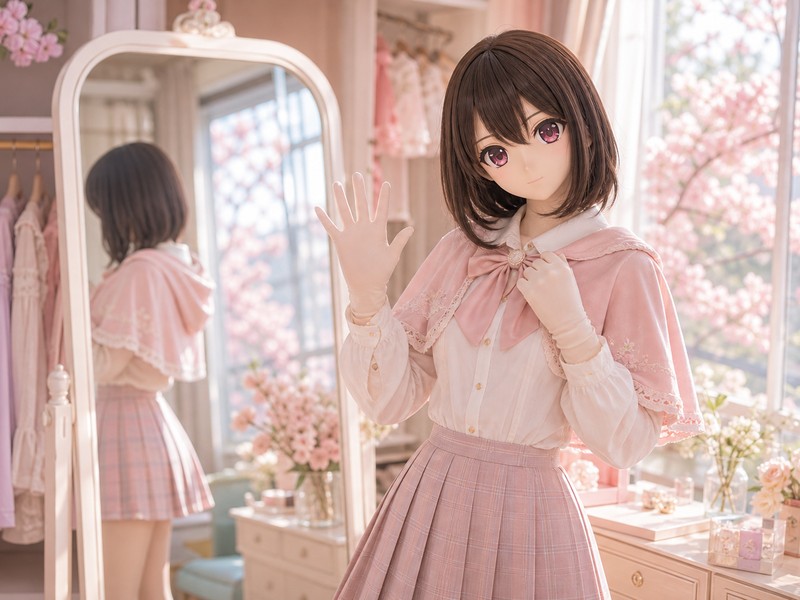
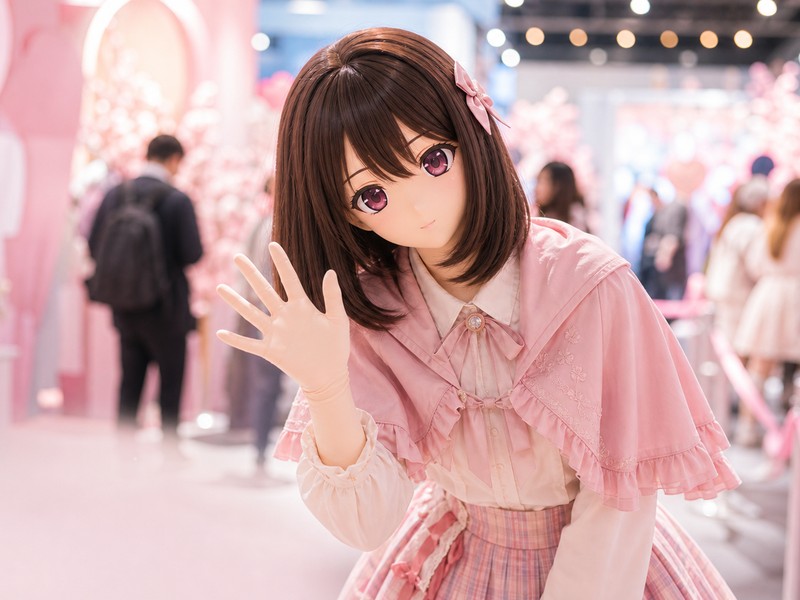
Coats, capes, high collars, shoulder pieces, and longer wig ends are old friends for Kig head-body proportion. If the lower rim of the shell, the neck base, or the shoulder line feels too abrupt, an outer layer can work like a soft box: a short jacket stabilizes the shoulder, a cape blurs a hard transition, and a collar lets the neck read more quietly.
The trap is that outer layers can swallow the waistline. A long coat shortens the lower body, an oversized top hides the center, and cape over sleeve over scarf can turn the character into a beautiful fabric cloud with no readable structure. The layer should soften the head and shoulders, then hand the silhouette back to the waist, skirt, legs, and shoes.

- Short jackets, capes, high collars, and hair ends can connect shell, neck, and shoulder more naturally.
- Long coats and wide capes add drama, but they can shorten the body and limit sitting or arm movement.
- Do not ask one coat to solve every issue; collar, hair, shoulder, skirt length, and shoes need to cooperate.
- If the outer layer is thick, hydration, cooling, shell removal, and access openings become part of the fitting.
Shoes and endpoints: the sentence ends at the ankle
Shoes often get treated as a small final choice, but in Kig styling they can decide the whole body line. Round-toe shoes add doll softness, Mary Janes support sweet or school routes, boots can organize leg lines, and platforms add presence. Each choice changes instep wrinkles, ankle edges, toe space, and walking rhythm.
Short skirts, short sleeves, bare shoulders, straps, and high-exposure roles make the Kig skin visible as a main part of the image. Tone continuity, neck flow, wrist ending, ankle edge, shoe opening, and fabric fingers all become visible. The more skin a character shows, the more calmly every endpoint needs to be finished.
- The shoe opening should not cut exactly where fabric bunches, slips, or exposes an edge.
- Short skirts need sitting length and walking safety; short sleeves need wrist coverage and hand access checks.
- Close-ups read the neck and hands; half-body images read shoulders; full-body images read shoes and hem length.
- For offline days, a light backup shoe or shoe bag can save the trip home from becoming the villain arc.
Wide sleeves and props: photo drama becomes real-world radius
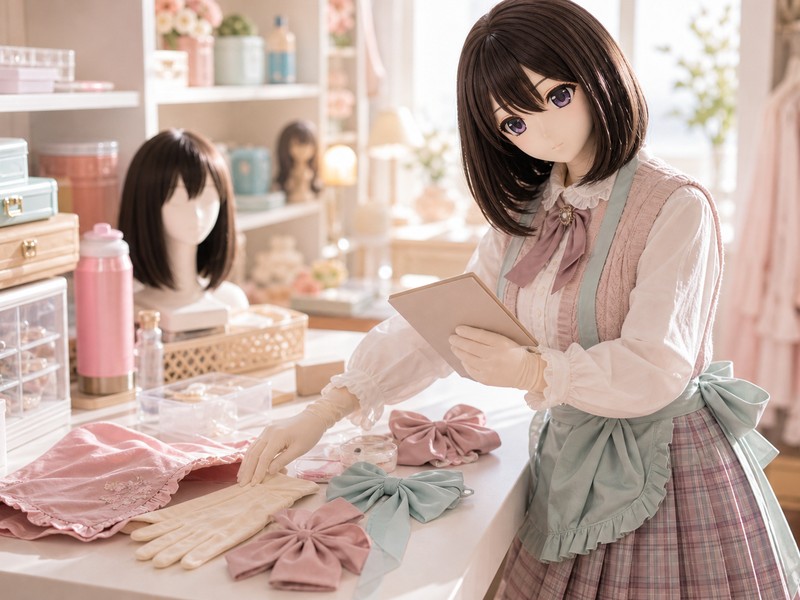
Wide sleeves, long coats, capes, bags, tails, umbrellas, plush props, and big hats all count as costume volume. In photos, they add drama and make the character feel less like a static standee. In a real room, they become a radius: they can sweep other people, catch on doors, block hands, hide a bottle, or slow down the support helper.
Before falling completely in love with a large prop, ask two small questions: Can it be removed while moving, and where does it rest during breaks? If a prop is only needed for photographs, it can live with support or in its own bag between shots. If a cape, backpack, or sleeve blocks an access opening, it is not only atmosphere anymore; it is a logistics issue wearing a pretty face.
- Wide sleeves and long coats can strengthen the character mood and make hand poses easier to manage.
- More volume means a larger walking radius, especially in lines, narrow doors, stairs, and crowded rooms.
- Props need a removable plan, a one-hand handoff plan, and a separate storage plan.
- Sleeves, capes, and bags should not block the back zipper, face-window rest path, wrist access, or large U opening.
Camera distance changes the outfit
The easiest way to misread costume volume is to judge it through one camera distance. In a close-up, the head shell, wig, neck, and collar dominate. In a half-body image, shoulders, sleeves, chest layers, and hand positions start speaking. In a full-body image, skirt width, shoes, leg exposure, and prop scale finally enter the frame. The same outfit can look too head-heavy in a phone close-up and perfectly balanced in a full-body shot.
Give each distance a job: close-ups need a clean head-shoulder transition, half-body photographs need natural sleeves and hands, and full-body images need skirt and shoe balance. The closer the camera, the cleaner the materials and edges should be. The farther the camera, the more the whole silhouette matters.

- Lower-body volume can balance a strong head shell in full-body images.
- Close shots magnify collar, neck, wrist, and material-layer problems.
- Prepare close-up, half-body, and full-body references instead of relying on one flattering image.
- If the head shell reads large, keep hand poses from crowding the face unless the character calls for it.
Logistics are part of the look
Once the outfit grows, logistics stop being a boring afterthought. Shell bag, wig protection, petticoat bag, coat, shoes, spare socks, small fan, water, towel, power bank, and storage pouches all decide whether the look travels safely to the scene and returns home without drama. A beautiful outfit that cannot be carried, cooled, rested, or packed is only half planned.
Rest belongs in the styling plan. Where is the seat? Can the skirt settle around it? Can the coat come off? Can the shell rest safely? Does a straw bottle work? Can the shoes be changed? Can support hold the prop without turning into a walking closet? Beauty is not produced by suffering through the day; it lasts longer when the plan includes when to shine, pause, and leave.
- A high-volume look with a support plan tends to stay calmer, cleaner, and more photogenic.
- A large skirt without rest space, packing bags, hydration, or cooling is basically extra difficulty mode.
- Before leaving, name every item: shell, wig, costume, petticoat, shoes, water, cooling, storage, and return plan.
- Plan where to remove the shell, change shoes, fold the skirt support, and leave the crowd.
Reading notes
- This guide discusses proportion, outfit planning, and event pressure in Kig styling; it does not rate bodies.
- Final outfit decisions still depend on the character design, maker confirmation, try-on rehearsal, movement plan, and venue rules.
- More volume is not automatically more professional. Stable dressing, movement, hydration, access, and readable photos matter more.
Continue reading
Kig Fit Atelier: Proportion Before Size
A Kig look works when the shell, wig, shoulders, costume mass, skin base, endpoints, openings, and exit plan can share one frame. This guide turns body-fit anxiety into a fitting brief before standard size, custom work, SKU options, or top-up links enter the conversation.
Continue reading →Kig Skin Thickness: Light, Opaque, and Still Wearable
Thin matte stretch can look light, soft, and alive, while thicker fabric can feel safer under strong light. Neither impression is a complete rule. Thin fabric may reveal underlayers or stretch lighter; thicker fabric may add heat, edge bulk, and movement cost. Start with exposed areas, camera distance, opacity under strong light, stretch change, wear time, endpoints, and the intended character texture.
Continue reading →How to Keep Kig Hands and Feet Visually Continuous
Hands and feet often become convincing in the smallest close-up: fingertips still belong to the character, and the shoe opening does not cut the foot back into ordinary reality. Protect that continuity without ordering every option at once. Confirm hand structure, opening placement, five-toe foot shape, shoe space, available photographs, and anything that has not been shown.
Continue reading →