Auto-detect first; manual choice is saved
Auto-detect first; manual choice is saved
Kig Lolita Tea Party: Let the Skirt Sit Before the Photographs Begin
Plan the shell, wig, Kig skin, petticoat volume, cup handling, shoes, seating, hydration, and support before the tea table becomes an editorial frame.
Contents
Now · Write the tea-party flow before the dress name
Quick take
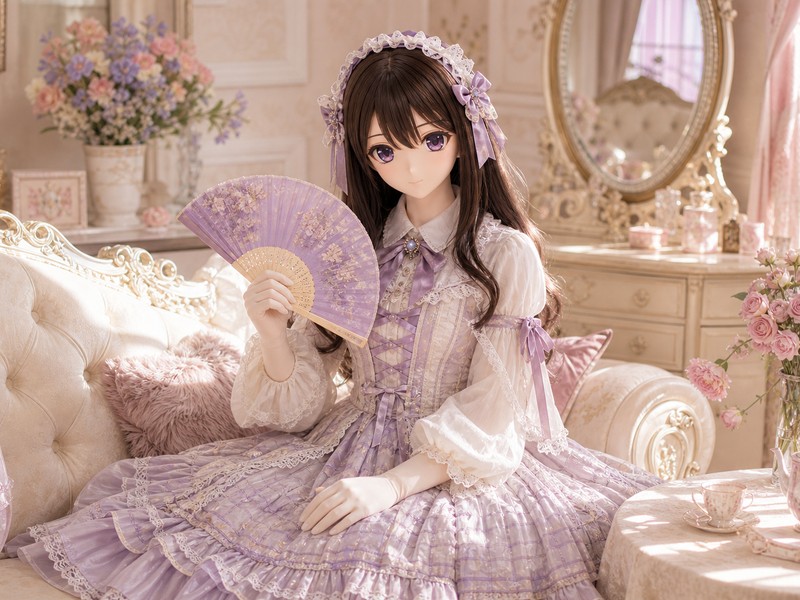
The tea-party spark is real: a petticoat opens, a cup rises, soft light lands, and the character begins to feel like a cover story. A tea party is still a moving scene. Rehearse the chair, cup, group photograph, hydration, and exit before deciding petticoat size, glove handling, shoes, and the support bag.
Write the tea-party flow before the dress name
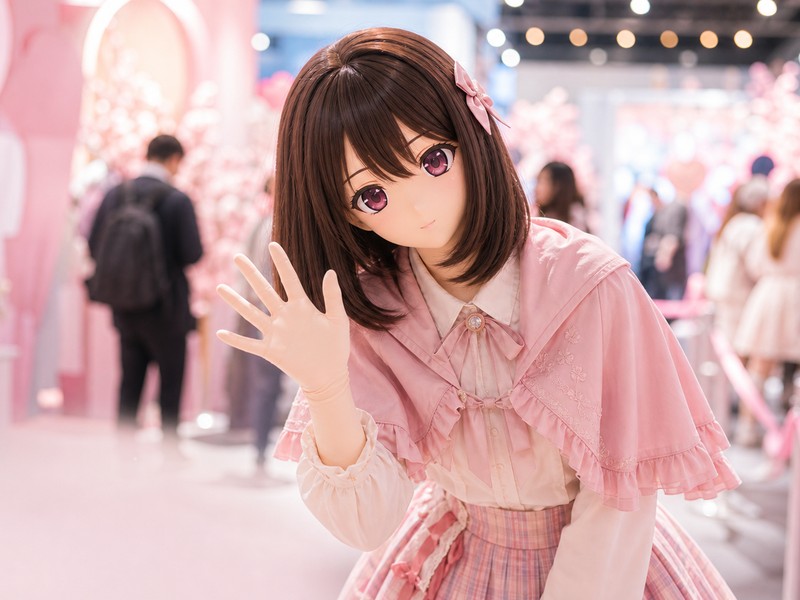
Lolita tea parties, casual street outings, and formal shoots may all look dreamy, but they pressure a Kig coordinate in different ways. A tea party has chairs, tableware, tablemates, narrow passages, and house rules. Street use adds weather and walking. A shoot adds repeated poses and camera distance.
If one outfit must serve several scenes, plan from the strictest one first. For a tea party, that usually means seating, hand operation, hydration, etiquette, and exit space. Then add camera movement or street walking as needed. Treating the tea party like a studio set with better cups is how the plan gets messy fast.

- Tea party: seating, tableware, companions, rules, and long wear matter most.
- Street use: shoes, walking path, weather, hydration, and visibility boundaries matter most.
- Photoshoot: camera distance, motion range, light, and photographer notes matter most.
- Mixed scenes: plan for the strictest setting first, then simplify.
Shell and petticoat: the upper and lower volume should support each other
Lolita petticoats are friendly to Kig because they can balance the head shell. If the shell has more visual weight, a skirt with enough volume gives the lower body a graceful counterweight. But the same petticoat also changes walking radius, chair space, table distance, and support work.
Do not judge only from a front standing pose. Check side depth, petticoat diameter, turning room, where the skirt goes after sitting, and whether the hard shell, wig edge, hair accessories, shoulders, and shoes form one clean outline. Too little skirt can make the shell feel top-heavy; too much skirt can make every movement feel like moving furniture in a lace palace.

- Standing: check shell, wig edge, shoulders, petticoat, and shoes as one outline.
- Side view: check skirt depth, table distance, and turning room.
- Sitting: rehearse where the skirt goes and whether the chair feels stable.
- Group photos: make sure the skirt does not quietly take the whole scene hostage.
Neck, tone, and cuffs should survive close table distance
Tea-party distance is often closer than outdoor photography. Tablemates, group photos, passing items, holding cups, and adjusting the skirt bring the neck, wrists, cuffs, and shell edge into view. Kig-skin tone, shell lower rim, separate matte hadatai neck, lace cuffs, and hand edges need a same-light check.
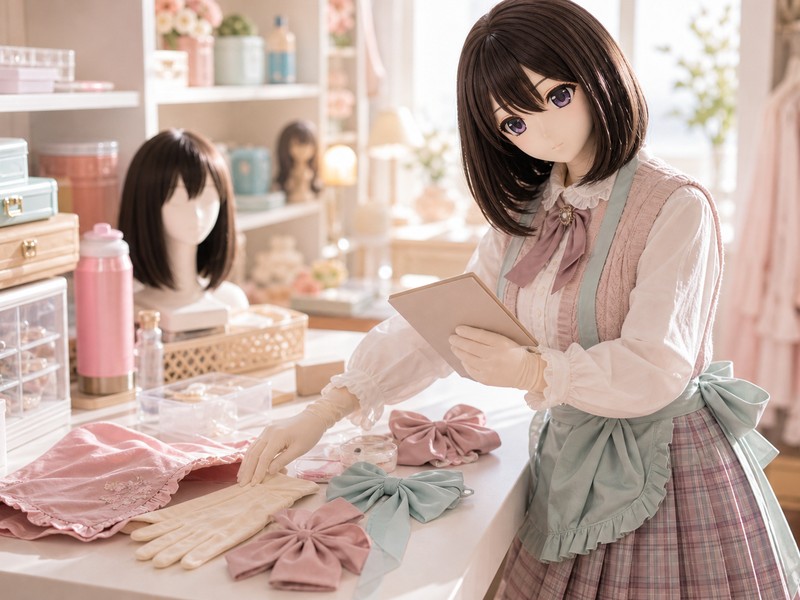
White, cream, pale pink, and pale blue dresses can make warm-light color shifts more obvious. Place the shell, fabric, cuffs, and five-finger hands in the same light before deciding whether the neck, wrist, and shell still belong to the same character body.

- Neck: shell lower rim, separate neck cover, neckline height, and base tone should connect.
- Cuffs: lace, bows, and sleeve accessories can hide or emphasize wrist edges.
- Wrists: access should sit on the inner wrist or palm side, not as a front-facing bulky line.
- Lighting: test tea-room warm light and window light separately.
Hands and shoes: the teacup moment makes details speak
Tea parties use the hands constantly: holding a cup, using cutlery, arranging the skirt, touching the chair, using a phone, and accepting something from a companion. If the hands are too thick, too wide, or too stiff, both the image and the experience suffer.
A steadier setup uses close-fitting five-finger Kig fabric hands, cuffs that cover the wrist edge, and enough access for real use when needed. Feet matter too: Mary Janes, low heels, soft soles, short boots, sock height, and skirt coverage should support standing time, sitting posture, and full-body proportion.

- Teacup: fingers need enough control for cup handle and saucer.
- Phone: if scanning, photos, or contact messages are needed, hand access matters.
- Cuffs: lace can hide edges while preserving operation space.
- Shoes: low heel, soft sole, round toe, and shoe-opening allowance beat decoration alone.
Sitting, hydration, and openings keep elegance usable
A tea party can include check-in, seating, conversation, group photos, small events, movement, and leaving. Shell, wig, petticoat, Kig skin, and warm indoor light stack together, so heat does not politely vanish just because the room is beautiful.
Face window, back zipper, large access opening, wrist or palm-side access, and shoe comfort should be checked against neckline, wig ends, belts, petticoat layers, shawls, and sleeves. A support helper should know water, rest point, change bag, and exit route before the room gets crowded.
- Sitting: test petticoat radius, chair width, and table distance.
- Hydration: plan straw bottle, rest timing, and shell-handling method.
- Back access: wig ends, shawls, and dress layers should not block everything.
- Support: decide who watches the surroundings, holds the bag, and reminds the wearer to rest.
One rehearsal before leaving
Before the outing, do one light rehearsal in the full outfit: hold a cup, sit, stand, turn, use a phone, drink water, arrange the skirt, and move around a chair. If those actions work, the tea party already feels calmer before arrival.
Share only the part each person needs: structure notes for the maker or studio, angle notes for the photographer, and live-operation notes for support. Practicality is allowed inside the dream. Very rude of it to look this cute, but there it is.
- Structure: shell, neck cover, dress image, cuffs, shoes, hands/feet, and openings.
- Actions: cup handling, sitting, standing, turning, phone use, hydration, and skirt arranging.
- Carry kit: straw bottle, handkerchief, spare liner, small fan, and storage bag.
- Venue: follow tea-party rules, keep passages clear, and avoid taking space by accident.
Reading notes
- This guide discusses Kig configuration and on-site actions for Lolita tea parties, not anyone's legitimacy in a community or outfit style.
- Visible skin in tea-party Kig should be handled by Kig skin / matte hadatai / zentai covering structures, not real neck, real hands, real feet, or broken skin-tone gaps.
- Tea-party rules depend on the organizer and venue; this guide only provides pre-order and pre-outing preparation checks.
Continue reading
The First Kig Outing: Pack the Excitement and the Way Home
A first Kig outing packs more than a head shell and body layer. Hydration, cooling, sightline, support, restroom access, rest points, a repair pouch, storage, photo boundaries, and a clear way home determine whether the day ends with good photographs or an exhausting recovery. A short, calm, well-supported appearance is already a real start.
Continue reading →Kig Street Snapshots: Let the City Breathe Around the Character
Street snapshots work best when the character feels present without fighting the city. Keep the outing short, choose comfortable shoes, move the camera farther back, protect the head-shell sightline and covered endpoints, agree on companion cues, carry water, and leave before the frame grows tired.
Continue reading →Kig on Stage: The Spotlight, the Bow, and a Clean Exit
A stage look is not a street outfit with louder music. Plan the performance as a chain: arm lift, turn, blocking, stairs, prop work, bow, water, recovery point, and exit. Then check whether the hard shell, wig edge, hadatai neck, Kig-skin stretch, fabric hands, covered feet, shoes, costume layers, support cues, and camera distance can survive the full sequence.
Continue reading →