Auto-detect first; manual choice is saved
Auto-detect first; manual choice is saved
How to Read Kig Review Photos Without Asking One Frame to Prove Everything
Begin with the image, then look closely at the shell-neck transition, endpoints, wrinkles, openings, order questions, and privacy boundaries.
Contents
Now · Enjoy the photograph first; then ask what it actually shows
Quick take
Use four simple states when reading a photograph: keep reading when the shell-neck transition and endpoints are visible; ask when same-light tone, close-ups, or openings are missing; pause judgment when only a filter, angle, SKU phrase, or comment remains; keep the image private when it contains personal details, watermarks, platform interfaces, or unsuitable framing. Anything outside the frame stays marked as not seen.
Enjoy the photograph first; then ask what it actually shows
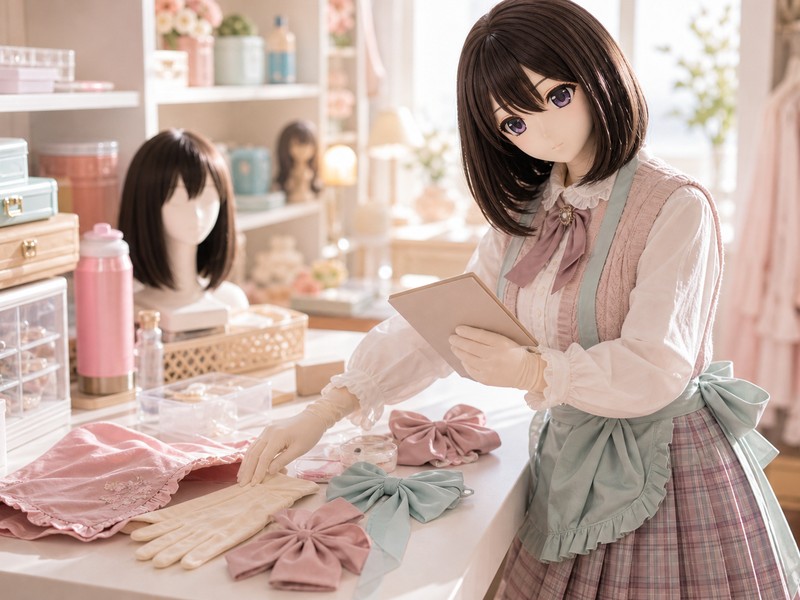
The photographs that stop the scroll are often quiet ones: warm light, a calm head shell, a fabric hand that still belongs to the same character skin, and a toe line that does not break at the shoe opening. That first response is allowed to remain simple—the image looks good, and the character feels present.
Then bring in the magnifier. Did the lower shell rim and neck cover appear together? Were wrists or ankles hidden by sleeves, shoes, wig, or pose? Are the five-finger hands and five-toe feet clear enough to inspect? Do the wrinkles follow four-way-stretch fabric tension? Was the opening actually photographed?
- Let the spark in: atmosphere, character continuity, and soft tone are valid reasons to keep looking.
- Then collect clues: shell-neck context, wrists, ankles, hand-foot endpoints, wrinkles, and openings each get their own note.
- If it was not photographed, mark it as not seen and turn it into a maker question or delivery check.
- Save the screenshot privately, write down the missing details, and move confirmed answers into the order note.
The most useful reference is not always the dreamiest one
The most useful photograph is not always the one with the softest filter or sweetest pose. It is the one that leaves the edges visible: lower shell rim and neck layer, wrist and sleeve, ankle and shoe opening, fabric palm and fingertips, toe shape and shoe space. Atmosphere creates the desire; visible edges make the next conversation possible.
- Lower shell rim, neck cover, or high-collar handoff makes the head-body transition readable.
- Wrists, ankles, sleeves, shoes, and garment edges show whether endpoints are hidden or continuous.
- Hand-foot close-ups showing finger roots, palms, toe roots, and shoe space answer more than a distant mood shot.
- Several photos across angles and light are stronger than one impressive filtered image.
Each kind of image answers a different question
Label the image before trusting what it seems to imply. A buyer photo can show one sample in one light, angle, and wearing state; a product-detail image shows what the seller chose to display; SKU wording, add-on text, seller claims, and comments only establish that something was mentioned. An original illustration can explain the reading method, but it cannot stand in for a real transaction sample.
Clear photos and product-detail context can support visual observation; maker confirmation belongs to the order agreement; delivery inspection shows whether the received item matches that agreement. The order is simple but useful: photographs show what was visible, chat records what was promised, and delivery reveals what was made.

- Buyer photos: best for real wear, flat-lay state, wash changes, wrinkles, toes, wrists, tone, and angle limits.
- Product-detail images: useful for displayed structure, but staged-photo, retouching, and favorable-angle risk remain.
- SKU / add-on wording: shows that a configuration was listed or charged, not that the image displayed it.
- Seller claims: keep them as communication and order-agreement notes, not as visual confirmation.
- Comment text: useful for repeated concerns, weak for one-line verdicts.
- Original illustrations: explain structure and method, but never show what a real order contained.
Do not read tone from one pink patch
Tone only becomes useful in context. Whenever possible, look for the shell face, lower rim, separate neck cover or high collar, wrists, ankles, legs, and garment edges in the same photograph or set. Natural light, warm indoor light, venue lighting, phone white balance, and platform compression need separate notes; otherwise light is easily mistaken for color and filters for workmanship.
Read animegao and kigurumi heads as manufactured hard shells. The character returns to the body through a separate hadatai or Kig-skin neck cover, high collar, or garment neckline. If wig, collar, or pose hides that transition, mark it as not seen. A beautiful overall mood cannot speak for a detail that never entered the frame.
- Same-frame first: shell, neck cover, wrists, ankles, and garment edges need shared context.
- Separate lighting: natural light, warm lamps, cool venue lights, and compressed platform images do not belong in one color standard.
- Mark obstructions: wig, collar, sleeves, shoes, stickers, and pose can all hide key edges.
- Multiple consistent photos beat one perfect-looking color block.
Wrinkles are not failure; fabric is speaking
Regular Kig skin / hadatai is four-way-stretch fabric. Unworn, it may collapse, contract, and fold; worn, it should fit closely, but armpits, waist, knee backs, ankles, wrists, and toe roots may still show tension wrinkles. A completely wrinkle-free image can look appealing, yet Kig skin is not a plastic shell. Small tension lines around joints and endpoints often look closer to the real behavior of thin stretch fabric.
The warning sign is not every wrinkle. Watch for hard, thick, plastic-like, work-glove, heavy cotton, or glossy rubber edges that no longer read like light fitted Kig skin. Regular Kig skin should read as matte fabric; latex/rubber highlights should not be copied onto hadatai, wig fiber, or painted hard shells.

- Unworn: read softness, rebound, natural folds, and thin-fabric drape.
- Worn: read tension around shoulders, elbows, waist, knees, wrists, ankles, and toe roots.
- Lower-confidence signals: thick edges, hard wrinkles, rubber-shell feel, or heavy cotton-like behavior.
- Keep matte Kig skin, zentai, latex/rubber, and gel-suit materials in separate standards.
Fingertips and toe tips are where the spark needs a zoom-in
Hands and feet can make the character continuity feel complete, and they can also break it quickly. Hands need five fabric-covered fingers in the same tone, material, and thickness, with believable fingertip, finger-root, palm, and wrist behavior. Feet need exactly five covered toes, toe-root folds, foot shape, ankle connection, and enough shoe space so the toe line is not squeezed into a strange outline.
The most useful close-ups turn “looks fine from far away” into “the endpoints still hold up.” But text saying “hand zipper” does not mean the zipper entered the photo. If the opening was not shown, record only hand shape, fabric behavior, wrist transition, toe count, and shoe fit.

- Hands: finger count, covered fingertips, finger roots, palm wrinkles, same tone/material/thickness, soft fit, and wrist transition.
- Feet: toe count, toe-root folds, foot shape, sole area, ankle connection, and standing deformation.
- Shoes: round-toe shoes, Mary Janes, and boots all need toe-box space; a too-small shoe can make the foot read larger.
- Pause signals: bare hands, bare feet, thick gloves, nail-like tips, fused toes, wrong toe count, or work-glove styling.
Openings need photos, not imagination
When listing text says “hand zipper,” the appeal is obvious: phones, head-shell adjustment, hydration, and wig tidying all sound easier. Keep text and photo separate. If a buyer photo shows hand shape, wrist wrinkles, or a side seam but no opening, fabric lip, zipper pull, or closed state, record only what entered the frame and mark the opening as not seen.
Product-detail images follow the same rule. Some images show a side opening, but color, material, watermark, visible pull, and styling may differ completely from warm-peach Kig skin. Such an image can suggest that an opening might sit near the palm-side to wrist-side area; it cannot become a universal standard for hidden openings.
- Hands: record an opening only when the inner-wrist, palm-side, or thumb-root area is actually visible.
- Back and face-window areas: look for the actual zipper line, fabric lip, maintenance edge, and cover behavior.
- Other maintenance structures: record visible position, use, and cover method; do not turn them into off-topic display.
- SKU / comments: treat them as configuration clues, not substitutes for a visible detail.
After the spark, turn unseen details into order notes
Reading a photo should lead to a clearer maker question, not stop at a vague sense of understanding. Record what the frame actually shows, turn unseen details into questions, and move confirmed answers into the order note. Kig skin orders often combine a main listing, add-on items, separate charges, or one-off payment links; an add-on link is a payment container, not an independent product body.
Turn gaps into short questions instead of sending a giant emotional essay. For tone, ask for natural-light shell-neck context. For hands, ask about five-finger fabric hands, wrist transition, and whether an opening exists. For feet, ask about five-toe sock feet, toe-root folds, and target shoe space. For openings, ask about position, use, fabric cover, visible pull, and whether the target outfit can hide it. Once confirmed, the order note records configuration, not mysticism.
- Tone question: can the maker show or describe shell, neck cover, wrist, and ankle context in natural light?
- Hand question: are five-finger fabric hands the same tone, material, and thickness, and how does the wrist transition work?
- Foot question: how are five-toe sock feet, toe-root folds, sole area, and the target shoe toe box handled?
- Opening question: where is it, what is it for, how is it covered, and does the pull stay hidden enough for the target outfit?
- Order note: write confirmed configuration, add-ons, color, hands, feet, openings, and non-accepted items as checkable notes.
- Private reference: keep product screenshots, option wording, maker confirmations, order notes, and delivery photographs together, and remove personal details before sharing anything.
Reading notes
- Platform examples are used here only to explain how to read photographs; they are not a seller ranking, recommendation, quality guarantee, inventory statement, price statement, sales statement, lead-time claim, or service-status claim.
- Buyer photos, product-detail images, SKU/add-on wording, seller claims, comments, and original illustrations answer different questions. If the structure was not photographed, mark it as not seen, ask the maker, or check it after arrival.
- Keep platform screenshots, order details, room clues, recognizable faces, and other identifying material private. When sharing a problem or method, use only the minimum de-identified information needed to explain it.
Continue reading
How to Keep Kig Hands and Feet Visually Continuous
Hands and feet often become convincing in the smallest close-up: fingertips still belong to the character, and the shoe opening does not cut the foot back into ordinary reality. Protect that continuity without ordering every option at once. Confirm hand structure, opening placement, five-toe foot shape, shoe space, available photographs, and anything that has not been shown.
Continue reading →Kig Skin Zippers: Read the Product Term Before Assuming the Opening
A clean, low-contrast line can be part of a Kig skin’s appeal. The problem is that “zipper” may refer to a head-shell pull, a top-up link, display page, SKU phrase, or an actual back, hand, face-window, or large-U opening. Read the closed line, pull, fabric lip, coverage, open state, payment binding, and any detail that remains unseen.
Continue reading →Before Payment: Read the Photo, Product Page, and Maker Reply Separately
A strong Kig photo, a low entry price, or one happy review can make an order immediately tempting. The purpose here is not to kill that interest, but to keep each claim within its proper scope: what the main product and selected SKU say, what each top-up link belongs to, whether additions are separate, when lead time starts, and how after-sales is described. The result is not a shop ranking; it is a clearer maker question and a calmer delivery review.
Continue reading →